Friends
  • Amsterdam marijuana seeds Cheap cannabis seeds. Get 20 seeds for free with each order. Limit OFFER
  • Cannabis seeds review Review cannabis, weed seeds. Buy marijuana seeds online
  • Seedsman Our aim is to provide the finest quality cannabis seeds at the lowest prices. Discount Code is SD4886 with each order
  • Sensi Seeds bank Sensi Seed Bank varieties are the product of the very finest cannabis genetics for over 20 years

Posts Tagged ‘Cannabis Research’

Marijuana Said to Trigger Heart Attacks
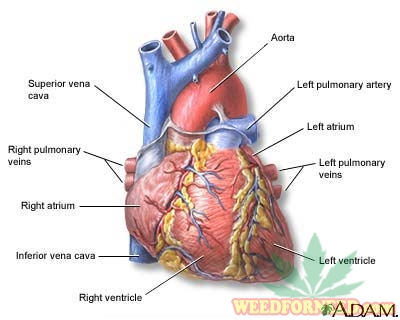
hartHere is something we found on the Harvard gazette website. Although the risk of having a marijuana associated hearth attack is very small (around 1 in 100,000) this news is very likely to be miss-used by the anti marijuana lobby.

Next time you hear some anti-drug nincompoop talk about how you can get a heart attack from cannabis, keep this in mind; The real risk applies only to die-hard couch potatoes and even for this high-risk (no pun intended) group smoking medical marijuana is still less risky than running to catch your bus..

Marijuana can be hard on the heart. In the first hour after smoking pot, a person’s risk of a heart attack could rise almost five times, according to a Harvard University researcher.

As baby boomers born in the late 1940s and early 1950s reach the age at which heart disease is the leading cause of sickness and death, “we may see an increase in marijuana-associated heart attacks,” says Murray Mittleman, an assistant professor at Harvard Medical School and Harvard School of Public Health.

The possible medical uses of the drug are receiving more and more attention. Mittleman thinks such use may be a bad idea for people with heart disease.

The danger exists in the first hour after smoking pot, Mittleman told an American Heart Association meeting in San Diego today (March 2). “It causes the heart rate to increase by about 40 beats a minute,” he says. “Blood pressure increases then abruptly falls when the person stands up. This could precipitate a heart attack.”

Mittleman noted that, as an immediate trigger for heart attack, pot smoking is nearly twice as dangerous as sex for a sedentary person, exercise for a fit male or female, a tantrum of rage, or a bout of anxiety. But it’s less risky than a spurt of exercise for a couch potato or a snort of cocaine.

Despite the high percentage of people younger than 50 years old who report they use the drug – 12.5 percent – Mittleman doesn’t foresee an epidemic of pot-triggered heart attacks. For a 50-year-old baby boomer without other risk factors, like high blood pressure or high cholesterol, the absolute risk of having a heart attack in the crucial first hour after smoking marijuana is one in 100,000, he says.

These findings come from a study of 3,882 people who survived heart attacks. It was conducted at a number of centers around the country, including Beth Israel Deaconess Medical Center in Boston, where Mittleman works. In the study, 124 people reported using marijuana regularly. Of these, 37 people said they used it within 24 hours of their heart attacks. Nine said they smoked it within an hour of their attacks.

From this data, the researchers conclude that the relative risk of a heart attack jumped 4.8 times within the first hour after smoking, then dropped to 1.7 times in the second hour. That’s still double the risk, but the drop indicates that the danger declines rapidly.

Mittleman admits he can’t explain exactly how pot could trigger a heart attack. It might be due to cannabis, the active ingredient of marijuana, or merely the smoke from a burning plant, he says. Smoking marijuana and tobacco both involve the latter, and both are now implicated in raising the risk of heart disease.

Houses made of hemp could help combat climate change!

We have recently come across this very interesting press release from Professor Peter Walker at the University of Bath (U.K) who is leading the research into the use of hemp-lime in construction.  Buildings and other infrastructure currently accounts for almost 20% of the UK’s eco-footprint.  This is another example of how this wonderful plant can help save reduce carbon dioxide emissions.  Recently we brought you the news that Hanes – one of the worlds biggest consumer brands – has been investing in a new hemp technology called Crailar which requires only a fraction of the water needed to make cotton; and we are very happy to announce that it is the subject of another of our articles, a Dutch company called Hempflax who has won the contract to supply the raw materials to Hanes – i.e. the HEMP!

Here’s the press release:

Houses made of hemp, timber or straw could help combat climate change by reducing the carbon footprint of building construction, according to researchers at the University of Bath.

Currently the construction industry is a major contributor of environmental pollutants, with buildings and other build infrastructure contributing to around 19% of the UK’s eco-footprint.  Researchers at the BRE Centre for Innovative Construction Materials are researching low carbon alternatives to building materials currently used by the construction industry.  Although timber is used as a building material in many parts of the world, historically it is used less in the UK than in other countries. Researchers at the Centre are developing new ways of using timber and other crop-based materials such as hemp, natural fibre composites and straw bales. Their work using straw bales as a building material has already been featured on Channel 4’s Grand Designs series.

Professor Peter Walker, Director of the Centre, is leading the research. He said: “The environmental impact of the construction industry is huge. For example, it is estimated that worldwide the manufacture of cement contributes up to ten per cent of all industrial carbon dioxide emissions.  “We are looking at a variety of low carbon building materials including crop-based materials, innovative uses of traditional materials and developing low carbon cements and concretes to reduce impact of new infrastructure. As well as reducing the environmental footprint, many low carbon building materials offer other benefits, including healthier living through higher levels of thermal insulation and regulation of humidity levels.”

Their research is being presented at the Sustainable Energy & the Environment showcase at the University of Bath.  The exhibition will be opened by David Willetts MP, Shadow Secretary of State for Innovation, Universities & Skills, and will be attended by industrialists, research councils, local and national government representatives and other key stakeholders from across the South West.  The exhibition coincides with the launch of the Institute for Sustainable Energy & the Environment (I-SEE) at the University of Bath, which will bring together experts from diverse fields of science, engineering, social policy and economics to tackle the problems of climate change.

I  found another article on the subject which can be read here:

Hemp could be used to build carbon-neutral homes of the future to help combat climate change and boost the rural economy, say researchers at the University of Bath.

A consortium, led by the BRE Centre for Innovative Construction Materials based at the University, has embarked on a unique housing project to develop the use of hemp-lime construction materials in the UK.  Hemp-lime is a lightweight composite building material made of fibres from the fast growing plant, bound together using a lime-based adhesive. The hemp plant stores carbon during its growth and this, combined with the low carbon footprint of lime and its very efficient insulating properties, gives the material a ‘better than zero carbon’ footprint.  Professor Pete Walker, Director of the BRE Centre for Innovative Construction Materials, explained: “We will be looking at the feasibility of using hemp-lime in place of traditional materials, so that they can be used widely in the building industry.  “We will be measuring the properties of lime-hemp materials, such as their strength and durability, as well as the energy efficiency of buildings made of these materials.  Using renewable crops to make building materials makes real sense – it only takes an area the size of a rugby pitch four months to grow enough hemp to build a typical three bedroom house.  Growing crops such as hemp (cannabis Sativa) can also provide economic and social benefits to rural economies through new agricultural markets for farmers and associated industries.”

The three year project, worth almost ?750,000, will collect vital scientific and engineering data about this new material so that it can be more widely used in the UK for building homes.  The project brings together a team of nine partners, comprising BRE Ltd, Feilden Clegg Bradley Studio architects, Hanson Cement, Hemcore, Lhoist UK, Lime Technology, National Non-Food Crops Centre, University of Bath and Wates Living Space.  As part of the project the University of Bath received a research grant of ?391,000 from the Renewable Materials LINK programme run by the Department for Environment, Food & Rural Affairs (DEFRA).

Hemp vs Cotton – The Pros and Cons

Historically, hemp has proven to be a versatile and durable substance and therein lies the contradiction. For nearly a century now, Hemp has been overlooked and under-appreciated as a viable alternative to cotton, possibly as a result of its connotative association with marijuana. To clarify, hemp has no psychoactive properties.

PROS: Hemp fibre is surprisingly useful as a cotton, paper, cellulosic or polymer substitute when it is treated correctly. As a crop, it is low-maintenance and resilient, and requires none of the weeding and heavy use of pesticides usually required in farming.  Hemp is particularly effective as a source for textiles. The fibres drawn from the hemp plant are the strongest and longest in nature. Fabrics, twines, yarns and cords made from hemp are durable and versatile. It can be combed into any gauge or quality of fibre. As a substitute for such diverse substances as cotton, trees, or petroleum, hemp proves to be more environmentally sound than all of its alternatives (requiring about 10% of the water needed to produce cotton) and its versatility and resilience make it economically sound as well.

CONS: Hemp fibre is characterised by undesirable susceptibility to moisture and rot due to moulds and mildews and the like. It is also characterized by a strong, naturally-occurring odour which makes it unacceptable as a substitute for other odourless fibres. Moreover, hemp fibre in its natural spun state is susceptible to fraying and has a rough hand and feel. A need therefore remains for a hemp product which is suitably strong, soft, flexible, moisture-resistant and rot-resistant and generally suitable for substitution in applications previously focused on the cotton, paper and petroleum-fibre industries.

Hempflax are the leaders in this field in Europe and are based in Holland.

Cannabis Patents – Cannabinoid Patch

United States Patent US6113940:
Cannabinoid patch and method for cannabis transdermal delivery.

Cannabis as a medicine, medicinal marijuana, seeds, hemp, sativa, patentWe  found this patent application in the U.S for a cannabis patch similar to the nicotine patch which has been commercially available for years. Several companies (and even the U.S government – see our previous article “U.S Government Patents Cannabis“) have recently started to take notice of the medicinal properties of cannabis and have started a rush to patent any possible application of this wonderful natural herb. Part of this trend could be linked to the legalization movement which has successfully highlighted several medical advantages to cannabis over traditional pharmaceuticals, particularly the lack of significant negative side-effects when treating serious illness.

Here are the links to both the Patent outline and the Application in .pdf form

Hanes invests in Hemp!

After a decade trying to prove that hemp could be soft as cotton, one American company is starting to draw the attention to its product from some of the world’s biggest consumer brands.

Based in Portland, Oregon – Naturally Advanced Technologies Inc. – has developed an enzyme treatment which makes organic fibres (principally hemp and flax) suitable for producing clothes and other uses.  This treatment is known as “Crailar Fiber Technology”.  Here’s the information that Naturally Advanced provides about Crailar on their website:

“CRAILAR employs a simple, efficient 100% organic, enzyme bath and scales easily to leverage the global industrial hemp industry. In addition, CRAILAR Organic Fiber will be cost-comparable to organic cotton. Therefore, CRAILAR enables the transformation of hemp into a better sustainable alternative to organic cotton. “

Some of the world’s biggest consumer brands have displayed serious commercial interest in Crailar after a string of successful tests conducted at North Carolina State University which, according to Naturally Advanced CEO, Ken Barker, proved hemp can easily transition away from being a niche consumer fabric.

One of the world’s largest consumer apparel brands -  Hanesbrands Inc. ($4.2 billion in sales ‘08-’09) have just entered into a joint development agreement with Naturally Advanced to retrofit their existing dyeing equipment with the company’s enzyme process to study how its organic fibers can be entered into mainstream production.  Although this is currently just a test, it is just phase one of what is seen as a major move towards the commercialization of hemp.

This news provides further proof that even large companies like Hanes are becoming aware of the potential hemp has and are starting to invest.  One major issue remains; the cost of production.  This is still a major obstacle in hemp becoming more than simply a niche product, but when asked about the deal with Hanesbrands, Ken Barker recently stated that:

“Crailar shrinks far less during production than cotton, the resulting savings could bring its final cost closer to regular cotton than organic cotton, which is 60 percent more expensive than regular cotton.” and that the partnership (with Hanes) serves as “absolute validation that our technology is viable and capable of mainstream apparel production.

While Barker said it’s too early to guess how lucrative the Hanes deal could become, Matt Hall, VP of external communications at Hanesbrands, said that although the idea isn’t to replace cotton, if Crailar can be commercialized, it would mean being able to produce organic fibers for everyday products at competitive prices.

Alongside the deal with Hanes, Naturally Advanced also reached a spinning and trademark licensing deal with Patrick Yarns of Kings Mountain, North Carolina, a maker of industrial yarns, to produce Crailar products for denim, work wear, home furnishings and carpet markets; and a manufacturing agreement with Philadelphia dyehouse G.J. Littlewoods & Son Inc., which will produce the fabric ordered by Patrick Yarns.

In what could be an equally sizable deal, the company in June signed a development deal with Georgia Pacific Consumer Products LP, which makes household paper products such as Brawny paper towels. Barker said he was prohibited from disclosing details of the agreement.

The European leader in the production of industrial hemp fibre is Hempflax, based in Holland.

Cannabis to be legalized in Jamaica?

hahaExports of Jamaica’s primary agricultural products – sugar, bananas and bauxite – have slumped severely since the start of the global financial crisis. As this crisis deepens, many prominent Jamaicans are calling for the cultivation and exportation of marijuana to be legalized for medicinal purposes.

“This is the approach we have to take because marijuana can bring in some serious revenue….. the pharmaceutical industry needs marijuana as a major ingredient for medication” said Amsale Maryam of the Association of Developmental Agencies in Jamaica, at a Caribbean Regional Civil Society Consultation last month.

Drugs which contain marijuana derivatives are used to treat many diverse medical conditions including glaucoma, bipolar disorder, inflammation of the intestines, nausea and AIDS amongst others – with a reported US$200 million worth of medical-marijuana purchases each year, according to California’s State Board of Equalisation.

Cannabis as a cancer cure?

On the surface, it stands to reason that people who smoke cannabis could possibly face similar elevated risks for head and throat cancers as do those who smoke tobacco, and/or drink alcohol. Both alcohol and tobacco use carry significantly higher risks for such cancers.

In 1999, a highly – publicised study indicated that cannabis users might face some elevated risk of head and neck cancers, as is the case with consumers of tobacco and alcohol. However, even the researchers from that study cautioned against making too much of their results and called for further study.

Two recent studies appear to contradict that, suggesting that cannabis users face no increased risk of head and neck cancers, and may even enjoy a measure of protection. Results show that moderate cannabis users actually appear to have a reduced risk level for head and neck cancers compared to control cases. However, due of the limited power and length of use studied, a small or longer-term effect cannot be ruled out.

Both of these studies support a growing body of data that indicate that cannabinoids have potential anti-tumour and anti-cancer properties. Clearly, further examination is required!

Medical marijuana may protect against swine flu!

As schools return from their summer breaks, there is widespread concern amongst parents and teachers alike. Swine Flu (H1N1) thrives off the conditions typical in classrooms and younger demographics are particularly vulnerable. As manufacturers struggle to meet unprecedented demand, one company has a controversial idea.
According to Robert Melamede, CEO of Cannabis Science, the answer to this crisis may be found in a medicinal throat lozenge made from marijuana. Altough Mr. Melamede idea to administer his lozenge to children and to teens, may seem like a ridiculous idea, the medical reasons behind his approach may very well be quite sound.

Melamede is quoted by ABC News as saying: “Contemporary antiviral medical technology is currently inadequate to meet the world’s immediate challenges….we believe that cannabis extract-based medicines can reduce influenza deaths.”
Marijuana has long been known to suppress the immune system as it cotains natural, plant-based cannabinoids called phytocannabinoids, similar to the natural endocannabinoids released by the body during severe inflammations.

Last month, Cannabis Science, the company announced that it is seeking FDA approval for its flu-fighting lozenges – they may be on to something here!

Marijuana good for your brain

marijuana and brain

marijuana and brain

Forget the stereotype about dopey potheads. It seems marijuana could be good for your brain.

While other studies have shown that periodic use of marijuana can cause memory loss and impair learning and a host of other health problems down the road, new research suggests the drug could have some benefits when administered regularly in a highly potent form.

Most “drugs of abuse” such as alcohol, heroin, cocaine and nicotine suppress growth of new brain cells. However, researchers found that cannabinoids promoted generation of new neurons in rats’ hippocampuses.

Hippocampuses are the part of the brain responsible for learning and memory, and the study held true for either plant-derived or the synthetic version of cannabinoids.

“This is quite a surprise,” said Xia Zhang, an associate professor with the Neuropsychiatry Research Unit at the University of Saskatchewan in Saskatoon. Read the rest of this entry »

Dr. Bob Melamede – Biology of Democracy

Dr. Robert Melamede aka Dr. Bob is a professor specializing in cancer treatment working at the university of Colorado.

In the video below Dr. Bob explains about Endocannabinoids and the difference between BLP’s (Backward Looking People)and FLP’s (Forward Looking People).

His theory on Endocannabinoids and how they influence everything is interesting. Have a look for yourself as he explains the basics in this video.

He also had some very interesting things to say about Cancer in a response to the Rick Simpson story (Run from the Cure), which we expect many of you have heard about. If you haven’t, we recommend you watch it right now. Click here..