Posts Tagged ‘Society and Cannabis’
Cannabis legal in the Czech Republic?!
The Czech Republic is bringing in some very interesting legislation in 2010.
From January 1st, individuals in possession of 15 grams of cannabis or less will not be charged with a crime in the Czech Republic. The new laws, which decriminalize the possession of ‘small amounts’ of most currently illegal drugs, are based on a Justice Ministry proposal which was approved by the Czech government earlier this month.
Previously, there were few clear definitions of what level of drug possession was treated as ‘small’, since standards were based on internal police directives and could change from region to region. The new legislation clearly defines how much of each substance is considered a ‘small amount’ under the law. Individuals in possession of this amount or less will not be charged with a crime.
Additionally, the new laws seem to make it possible for individuals to grow up to five cannabis plants. However, if current Dutch legislation is anything to go by, this may not necessarily include indoor growing with lamps, nor allow households with several adults to grow five plants each.
In any case, this new legislation is a big step in the right direction and we hope that other European countries will be inspired by the Czech move towards a sane drug policy.
Rick Simpson – Freedom Fighter of the Year 2009
Last week during the High Times Cup 2009, Rick Simpson was awarded with the title Freedom Fighter Of The Year 2009. We feel that Rick Simpson is one of the people that truly deserves this title.
That is why we feel it is important to tell as many people as possible about this remarkable man and his fight for Medical Marijuana. Mr. Simpson claims that his pure cannabis oil can cure all kinds of diseases and even cancer. The Canadian government does not believe this and have tried to prosecute him as a drug dealer in the past even though his only crime is giving it away for free to terminally ill cancer patients. We don’t get this… Even if you do not believe him, what harm is there to have terminally ill cancer patient try this medicine?
Below you’ll find a short statement on recent events from Rick Simpsons website
On November 25th, 2009, one day before I was crowned the Freedom Fighter of the Year 2009 at the Cannabis Cup in Amsterdam, I received a word that I have been raided again by the RCMP. I contacted Tim Hunter at the Amherst attachment and asked I was being charged. Of course, he refused to give me straight answer. All he would say was that the RCMP wanted to talk to me.
After openly growing hemp in my backyard this past summer and announcing this fact to the public on tom Young?s open line talk show in June, how could the RCMP not be aware of my activities? The truth is they knew exactly what I was doing. RCMP officers were even sending people that needed help to me. I can only surmise that the purpose of this raid was to keep me from returning to Canada.
If I return home, I will be arrested and put in jail without bail or medicine. I am not afraid of their jails but I cannot go without my medicine, the system has nothing that could help me with my conditions. So for me to return to Canada would be like committing suicide. I would be thrown in jail and denied my medicine and a short time later you would hear in the news that Rick Simpson died of natural causes. I cannot tell the people of Canada who are depending on my presence to help their medical conditions how sorry I am. But it was not me who caused this situation.
Cannabis oil a cure for Parkisons disease?
Posted in Cannabis News, medicinal, Society and Cannabis Tagged: Canada, cancer, Cannabis Oil, medical marijuana, medicine, Parkisons disease, RCMP, Rick Simpson, THC
Ex-U.S. attorney: Time to change pot laws
Three years ago, former U.S. Attorney John McKay was somewhere near the front lines of the nation’s drug war.
Directing federal prosecutions in Western Washington before he was fired in 2006 by the administration that appointed him, McKay’s office sent marijuana smugglers and farmers to prison on decade-long terms. It indicted a loudmouth Canadian pro-pot activist for selling cannabis seeds by mail order.
So the crowd at an Edmonds auditorium could have been forgiven its surprise on Monday when McKay stood on stage with travel author and decriminalization advocate Rick Steves and declared that, of course, he is “against stupid laws.”
“I think there has to be a shift in the paradigm,” said McKay, now a professor at Seattle University. “The correct policy change would be a top-to-bottom review of the nation’s drug laws.”
McKay joined a panel as part of an effort by Steves and the American Civil Liberties Union to, in their view, return rationality to discussions about the nation’s drug laws. They were joined there by Egil “Bud” Krogh, a former official in the Nixon White House who gained notoriety during the Watergate scandal, and state Rep. Mary Helen Roberts, an Edmonds Democrat who joked Monday about being dubbed by her colleagues the “Marijuana Queen of Northwest Washington” for her efforts on medical marijuana law reform.
While the panelists did not agree on all points, each said they see the need for substantive change in the way marijuana is regulated and offenders are punished. They also each spoke about the fears, or lack of courage, of elected officials in addressing issues surrounding the drug.
Steves and the ACLU launched the initiative last year partly as a response to that fear. The effort, built around an infomercial “Marijuana: It’s Time for a Conversation,” is aimed at encouraging citizens to discuss the issue openly.
“This is an issue that’s scary for people,” Steves said. “I have friends who oppose what I do on this issue because they’re worried about their kids. What they don’t understand is that so are we.”
Addressing the audience, a group mixed in age and outward appearance, Roberts argued that the law as it stands takes an unjust toll on minority communities. In essence, she said, it leaves law enforcement agencies to pursue people who are easiest to catch while their efforts could be more productively spent elsewhere.
At the same time, she said, lawmakers — even those who believe the laws to be unjust with regard to marijuana — are afraid of being branded soft on crime.
“As a community and a society, we’re afraid of crime,” Roberts said. “And if what you’re doing is being referred to as ’soft on crime,’ even without details, legislators respond negatively to it.”
Roberts also said the Legislature must revisit the state’s medical marijuana law, which, in her view, fails to adequately protect patients.
McKay, though, said such changes fail to address the larger problems with marijuana laws in the country.
Even as the Obama administration has adopted medical marijuana rules similar to those he advocated while U.S. Attorney — specifically, that federal agents not interfere with state medical marijuana regulations — McKay said that simply having federal agencies ignore the laws enacted by Congress does not go far enough.
“Federal law makes the possession of any amount of marijuana a crime,” McKay said. “So, even if you’ve got a certificate from your doctor, a federal officer could arrest you. … That’s just bad policy.”
McKay faulted Congress for failing to take initiative on the issue. It is not the place of federal prosecutors or law officers to make policy, he said, nor should the White House go it alone.
In the end, he argued, marijuana should not be lumped in with cocaine, methamphetamine and heroin as part of the war on drugs. Marijuana law, McKay said, “should look a lot more like alcohol (regulations) and a lot less like cocaine and methamphetamine (laws).”
First Coffeeshop opened in the United States of America
Good news has reached us. In the city of Portland the first “Amsterdam” style Cannabis Caf? has been opened. Portland has (sort of) legalized the possession of Marijuana under an ounce(a little under 30 grams).
The Cannabis Caf? has opened it’s door at precisely 4:20 p.m. last Friday afternoon and is the first coffee house in Oregon catering to licensed users of medical marijuana.
The new cafe, run by the Oregon branch of NORML, went into operation just weeks after the Justice Department announced that people who use marijuana for medical purposes and those who distribute it to them will not face federal prosecution, provided they act according to state law.
It looks like nearly every other coffeehouse in town, with Wi-Fi access, Coffee, soft drinks, trays of Marsee Bakery pastries and sandwiches. The only difference is that shiny silver Volcano vaporizers are plugged into outlets lining the tiled bar and the familiar smell of medical marijuana patients using their “medicine”.
The comparison to an Amsterdam coffeeshop doesn’t really hold up, as you can’t actually buy your weed IN the Cannabis Caf?. Anne Saker from oregonlive.com explains:
“The only people permitted in the Cannabis Caf? are those licensed to smoke who also hold membership in the lobbying group Oregon NORML. Patrons will be charged $5 a day. They can bring their own or smoke donated marijuana. Oregon law says medical marijuana may not be sold.”
Does this mean that for $5 a day a member gets free “donated” weed? So without actually buying the weed you still get to smoke weed? Great!
Below a video of the opening of the Cannabis Caf? in Portland.
Posted in Cannabis News, Society and Cannabis Tagged: amsterdam, Cannabis Cafe, Coffeeshop, norml, Oregon, oregonlive, portland, United States of America, Volcano vaporizers
18 negative effects of the ban on cannabis
Here is a list of some of the negative effects of the ban on cannabis:
- The ban on cannabis means that in addition to the coffeeshops and people who grow for their own use, an illegal market in cannabis also exists. There is no possibility of control over this illegal market which leads to criminality, unsafe situations, and events that disturb the peace; and to which underage people have easy access.
- The ban on cannabis makes large scale crops and export of the product into a lucrative source of income for criminal organizations which can then use this income for other criminal activities, or ‘wash’ it via money laundering operations that can disturb the legal economy.
- The ban on cannabis encourages criminal and antisocial behavior: rules concerning safety and security (for growing and in the marketplace) are easily broken and this goes unpunished. Conflicts are resolved using violence.
- The ban on cannabis leads to an increase in prices, as the producer in an illegal market calculates their risk into the price.
- The ban leads to a migration of tourists to coffeeshops near the borders of the country, and the operation of ‘drug runners’ to transport the product. Simple solutions for this problem such as the proposal for a so-called ‘Weed Boulevard’ with legal supply logistics are held back by the ban on cannabis.
- The ban on cannabis puts enormous pressure on the resources of the police and the justice system, which cannot then devote them to other, more important goals. Some of the methods used to enforce the ban limit the personal freedom of civilians and are a matter of contention in court.
- The costs of enforcing the ban on cannabis are not justified by the results. Although the goal of the ban (an essential reduction in supply and demand) fails to come a single step closer, the ban itself is never brought forward for discussion.
- The ban on cannabis damages the credibility of the government, given that the use of cannabis continues to be firmly naturalized in society.
- The (world-wide) ban on cannabis is one of the pillars of the U.S. dominated War On Drugs, which has led to sizeable global violations of human rights; and severely damages both the environment, and the security of the populations of cannabis-producing lands.
- The ban on cannabis impedes the development of the industrial applications of the plant, which is capable of making a very valuable contribution to a sustainable future.
- The ban on cannabis makes it impossible to carry out standardized controls on the product. Therefore demands can hardly be placed on the product in terms of consistent quality, health, or accompanying information on the contents and effects of the product.
- The ban on cannabis leads to unwelcome and unhealthy practices in production which negatively affect the quality and effects of the product, and thereby damage the health of the consumer.
- The ban on cannabis criminalizes the cannabis consumer (over one million Dutch people), with negative social consequences for the people in question, their relationships, their family, and their home and work environment.
- The ban on cannabis is a restriction of the right to freedom of expression. It legitimizes information about the supposed evils of cannabis, information that cannot be seriously tested for durability, credibility or truthfulness and yet is used as justification for the active enforcement of the ban.
- The ban on cannabis damages the right of the individual to make decisions about his / her own body.
- The ban on cannabis damages the right of the individual to possess a medicine that is necessary to maintain or support his or her health and wellbeing.
- The ban on cannabis dissuades doctors from prescribing it to patients who could benefit from the effects; and delays the process of recognition of its medicinal applications in the treatment of multiple afflictions such as HIV and AIDS, Multiple Sclerosis, cancer, and chronic pain.
- The ban on cannabis denies the government the possibility of levying taxes on the product.
Source:
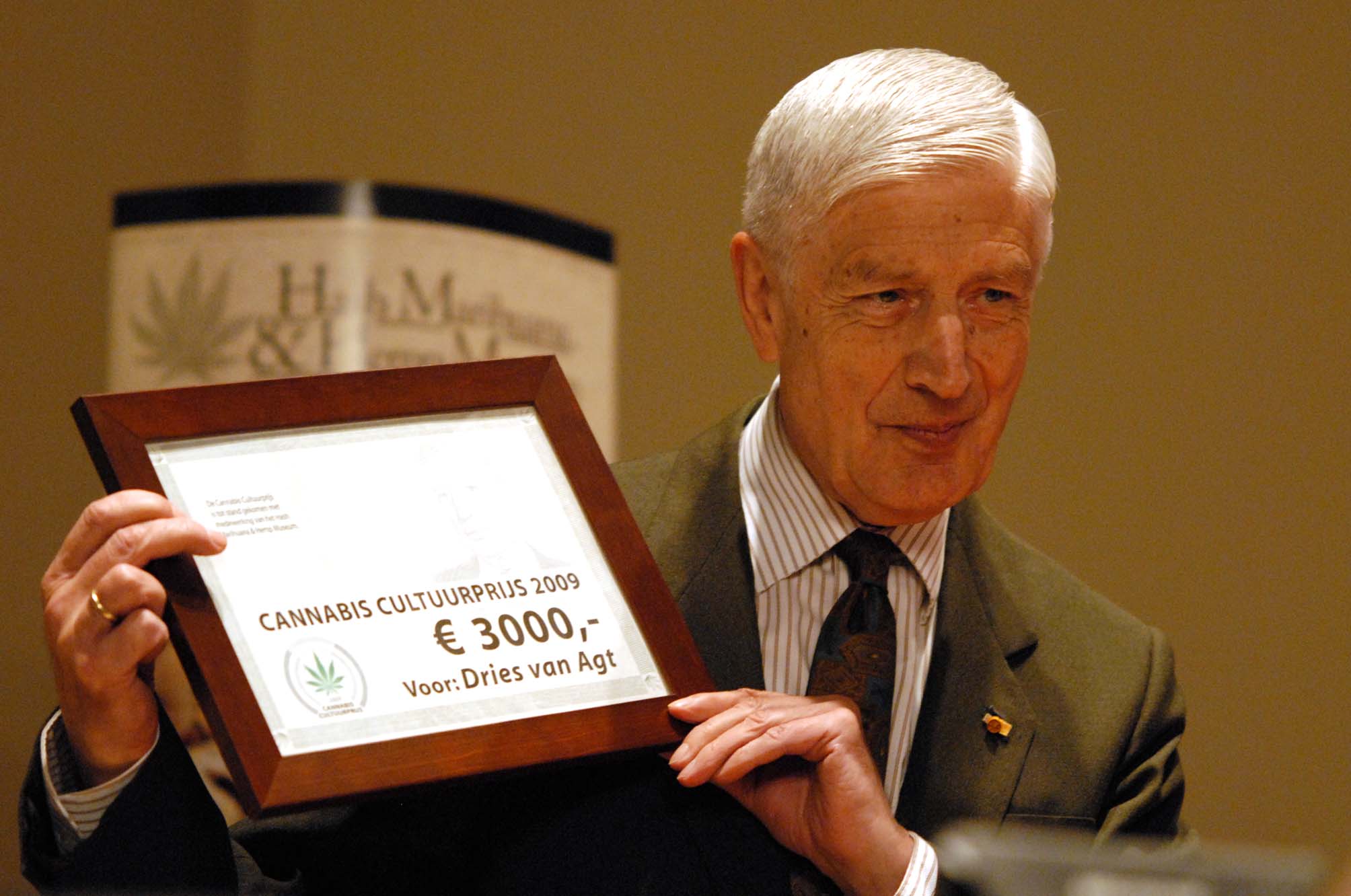
Posted in Quotes & Opinions, Society and Cannabis Tagged: cannabis, cannabis cultuurprijs, criminal organizations, Legalisation, medical, prohabition, top 18, war on drugs 
Cannabis Ebonics – Stoner Terms
We found this list of stoner terms online and thought we’d share them. Some of the terms are more frequently used in America however most (if not all) have made their way into the international stoner vocabulary. We also dug up a classic clip of Ali G listing other stoner terms:
April 20th (4/20) – International Cannabis Day, everyone blazes on this day. Everyone blazes at 4:20 every day too.
Blaze – To get high!
Blunt - Either a hollowed out cigar filled with marijuana or (more commonly) a “marijuana cigarette” rolled with a blunt wrap (tobacco paper or emptied cigar).
Bowl - Can refer either to the part of a piece that holds cannabis, or to the pipe itself.
Bogart - The act of holding on to a joint/piece/blunt for too long, or one who does such an act: “Don’t bogart that joint my friend, pass it over to me”.
Boo – A street name for marijuana, listed only in anti-drug literature. No one has ever heard or used it. If you are ever arrested for possession, you should use this term, saving the taxpayers the expense of correcting and reprinting anti-pot pamphlets.
Kick-Hole / Carb – The hole on the side of a piece used to regulate air flow. Hold it closed with your thumb while inhaling to draw smoke into the chamber, then release to let air in and force the smoke into your lungs. Also called a “rush hole”.
Cherry – The red burning coal of marijuana in a joint or bowl.
Chillum – A pipe with the bowl in line with the stem.
Ganja – Just 1 of many synonyms for cannabis, others include Dope, Marijuana, Grass, Draw, Puff, Blow, Weed, Gear, Ganja, Herb, Wacky Baccy, Skunk, Pot, Bob Hope and Bob – see the Ali G video below for many more
Hashish / Hash - The resin secreted by a marijuana plant. Different kinds of hash are prepared with a variety of recipes.
Hash oil - A liquid extracted from marijuana. Use mostly by dipping smokeables into the hash oil.
Hit – A drag or puff cannabis.
Hot Box / White wall - Getting high in a car or small space with no ventilation so that you are constantly inhaling atmospheric smoke.
Joint / Zut / Doob / Doobie - Marijuana cigarette. Kind Bud (chronic, hydro, sticky icky, highs) – High potency Cannabis.
Mids – Descent cannabis for the money you pay for it, if you don’t have a lot of money this is the best way to go.
Moocher – Someone who will smoke your bud in a second, but never has any of their own.
Papers / Skins – Cigarette papers used for rolling joints.
Piece - Refers to a pipe of one sort or another.
Resin - Black tar like stuff that builds up in smoking apparatuses.
Schwag – Low grade cannabis or the leftovers from the bottom of a big bag.

Top U.K government scientist says: Cannabis evidence ‘was devalued’
We came across this interesting thread on the BBC website which refers to a lecture given by Professor David Nutt, of the Advisory Council on the Misuse of Drugs. Professor Nutt used a lecture at King’s College in London and a briefing paper to attack what he called the “artificial” separation of alcohol and tobacco from illegal drugs, accusing ex-Home Secretary Jacqui Smith of “devaluing” scientific research. He also criticizes the scare-tactics of the U.K government on the issue and claims that the link between cannabis use and schizophrenia is hugely over-exaggerated; This story has some traction and has been on rotation on both BBC News 24 and British terrestrial television! It is a blow to the U.K government as Professor Nutt is the new chairman of the Government’s Advisory Council on the Misuse of Drugs – popularly known as the government’s “Drug Czar”.
Many observers are worried about the contradictory and incoherent nature of the U.K’s current drug policy which clearly hasn’t worked – The U.K has the 3rd largest cannabis consumption rate in the western world! The Home Secretary has herself admitted to smoking cannabis as a student whilst attending Oxford University – making her a MASSIVE hypocrite – if she had been caught under her own rules, she would never have been able to hold the position of Home Secretary!
I also came across a video on the subject… enjoy!

GASPAR FRAGA – IN MEMORIAM
October 17th 2009 saw the end of one of the most significant contributions to the antiprohibitionist fronts in Spain and Europe of the past decade. Gaspar Fraga Gonz?lez, founder and director of Ca?amo magazine, shed his mortal coil and peacefully departed on his final trip, surrounded by his loved ones, at the age of 65. His long battle with cancer had broken his body, but not his will. As the Commander of the Ca?amo vessel, he stood at the helm until the very end, inspiring those around him with his strength and determination in the face of adversity. His remains were put to rest in his beloved city of Barcelona to the music of his also beloved Frank Zappa and the adulations of the many present. He is survived by his two wifes, Sara and Mari Carmen, his daughter Lidia, two grandchildren, and many loving friends.
The passing of Gaspar Fraga marks the end of an era that began in 1997 when the first issue of Ca?amo hit the stands and became an immediate hit. Over the course of 142 issues and 12 years, Gaspar became the face of pro-cannabis antiprohibitionism in Spain and abroad, and worked actively in promoting the magazine’s stated goal of normalization by means of information, producing a huge body of written work between articles, research and his contributions to the Cannabis Cafe online community. He also contributed actively with European drug law reform group ENCOD and was often called upon to appear on TV to counter the anti-drug spokespeople, which he did with such demolishing efficiency that they often ended up agreeing with him.
Gaspar Fraga was a scholar of great eruditeness trapped in the body of a charming and boyish rebel to the bone. For many years, he was a rebel without a cause, banned from his native city of Madrid by the Franco regime for being a young long hair with a bad attitude. He went to Paris and studied philosophy at the Sorbonne, worked as a, paparazzi, model, current and fashion photographer and journalist and tossed pavement in May of 68. In 1970 he moved to Barcelona, to the neighborhood of Gr?cia, where he became actively involved in the city’s flourishing counterculture as the editor of the underground Rock Comix, and in the 80s he made a decisive contribution to recovering the traditional festivities of Gr?cia, which today congregate over a million people over the course of nine days every August.
But it was Ca?amo that truly gave cause to his rebellion. Under his guidance, the impact of the magazine has gone further and longer than anyone could have expected. As Commander of Ca?amo, Gaspar brought us to the very moment of truth, but for reasons known only to the higher powers, has left us to take this historic step without him. His legacy is now ours to uphold, and he was confident we can. Rest in peace, dear friend, we will not let you down.
Marc Emery – Prince of Pot
Here’s a piece I found on Marc Emery on U.S TV – it includes an interview with his wife Jodie Emery and is well worth a watch!
Marc is one of the figureheads of the cannabis legalization movement and his treatment by U.S and Canandian prosecutors who circumvented normal procedure to extradite him from Canada is both contradictory and illegal in our eyes. Further information can be found at
FREE MARC!
Posted in Cannabis News, Society and Cannabis, Videos Tagged: cannabis, cannabis prohibition, celebrities, drugs policy, government, jail, jodie emery, Legalisation, marc emery, marijuana, medicinal, Medicinal cannabis, medicine, police, politics, Sensi Seeds, society, THC, U.S, U.S.A
New medical marijuana policy issued by the President
The Obama administration announced today that it will not seek to arrest medical marijuana users and suppliers as long as they conform to state laws, under new policy guidelines to be sent to federal prosecutors Monday 19th October. A 3-page memo spelling out the policy is expected to be sent Monday to federal prosecutors in the 14 states which allow some use of marijuana for medical purposes, and also to top officials at the FBI and the DEA.

According to officials, the memo is designed to give a sense of prosecutorial priorities to U.S. Attorneys in the states that allow medical marijuana. It notes that sales in the United States are the largest source of money for violent Mexican drug cartels, but adds that federal law enforcement agencies have limited resources – It emphasizes that prosecutors have wide discretion in choosing which cases to pursue, and says it is not a good use of federal manpower to prosecute those who are without a doubt in compliance with state law.
And while the policy memo describes a change in priorities away from prosecuting medical marijuana cases, it does not rule out the possibility that the federal government could still prosecute someone whose activities are allowed under state law. Two Justice Department officials described the new policy to The Associated Press, saying prosecutors will be told it is not a good use of their time to arrest people who use or provide medical marijuana in strict compliance with state laws. The new policy is a significant departure from the Bush administration, which insisted it would continue to enforce federal anti-pot laws regardless of state codes. Fourteen states (Alaska, California, Colorado, Hawaii, Maine, Maryland, Michigan, Montana, Nevada, New Mexico, Oregon, Rhode Island, Vermont and Washington) currently allow some use of marijuana for medical purposes with more States expected to follow suit in the near future. California remains unique among those for the presence of dispensaries – businesses that sell marijuana and even advertise their services.
Attorney General Eric Holder said in March that he wanted federal law enforcement officials to pursue those who violate both federal and state law, but it has not been clear how that goal would be put into practice. The officials spoke on condition of anonymity because they are not authorized to discuss any legal guidance before it is formally issued. Officials were keen to stipulate that the government will still prosecute those who use medical marijuana as a cover for other illegal activity. The memo particularly warns that some suspects may hide old-fashioned drug dealing or other crimes behind a medical marijuana business. In particular, the memo urges prosecutors to pursue marijuana cases which involve violence, the illegal use of firearms, selling pot to minors, money laundering or other crimes. Medical marijuana advocates have been anxious to see exactly how the administration would implement candidate Barack Obama’s repeated promises to change the policy in situations in which state laws allow the use of medical marijuana. Shortly after Obama took office, DEA agents raided four dispensaries in Los Angeles, prompting confusion about the government’s plans.
Source:
Posted in Cannabis History, Cannabis News, medicinal, Society and Cannabis Tagged: Barack Obama, busts, cannabis, cannabis prohibition, DEA, dispensary, drugs, FBI, Legalisation, marijuana, medical, medicinal, Medicinal cannabis, raids, sativa, Sensi Seeds, THC, war on drugs, warrants, weed