Posts Tagged ‘Sensi Seeds’
Sensi Seeds Skunk#1 winner of the oldest spanish cannabis cup!
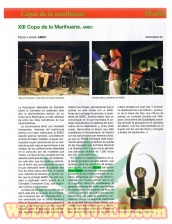
The AMEC cannabis Cup (Asociacion Madrilena de Estudios de Cannabis) is the oldest cannabis festival in Spain. The last cup was already the 13th edition of this spanish cannabis cup!
The overall winner was Skunk #1, from Sensi Seeds. This was also the winner in the categories Presence (appearance) and taste. The plant was grown outdoors (in a pot) from April till early October, and she was feed with “Organic Bloom and loads of love, at the mountains of Guadalajara”.
The second and third prize went to respectivly Shark Attack and Critical +.
Cannabis Ebonics – Stoner Terms
We found this list of stoner terms online and thought we’d share them. Some of the terms are more frequently used in America however most (if not all) have made their way into the international stoner vocabulary. We also dug up a classic clip of Ali G listing other stoner terms:
April 20th (4/20) – International Cannabis Day, everyone blazes on this day. Everyone blazes at 4:20 every day too.
Blaze – To get high!
Blunt - Either a hollowed out cigar filled with marijuana or (more commonly) a “marijuana cigarette” rolled with a blunt wrap (tobacco paper or emptied cigar).
Bowl - Can refer either to the part of a piece that holds cannabis, or to the pipe itself.
Bogart - The act of holding on to a joint/piece/blunt for too long, or one who does such an act: “Don’t bogart that joint my friend, pass it over to me”.
Boo – A street name for marijuana, listed only in anti-drug literature. No one has ever heard or used it. If you are ever arrested for possession, you should use this term, saving the taxpayers the expense of correcting and reprinting anti-pot pamphlets.
Kick-Hole / Carb – The hole on the side of a piece used to regulate air flow. Hold it closed with your thumb while inhaling to draw smoke into the chamber, then release to let air in and force the smoke into your lungs. Also called a “rush hole”.
Cherry – The red burning coal of marijuana in a joint or bowl.
Chillum – A pipe with the bowl in line with the stem.
Ganja – Just 1 of many synonyms for cannabis, others include Dope, Marijuana, Grass, Draw, Puff, Blow, Weed, Gear, Ganja, Herb, Wacky Baccy, Skunk, Pot, Bob Hope and Bob – see the Ali G video below for many more
Hashish / Hash - The resin secreted by a marijuana plant. Different kinds of hash are prepared with a variety of recipes.
Hash oil - A liquid extracted from marijuana. Use mostly by dipping smokeables into the hash oil.
Hit – A drag or puff cannabis.
Hot Box / White wall - Getting high in a car or small space with no ventilation so that you are constantly inhaling atmospheric smoke.
Joint / Zut / Doob / Doobie - Marijuana cigarette. Kind Bud (chronic, hydro, sticky icky, highs) – High potency Cannabis.
Mids – Descent cannabis for the money you pay for it, if you don’t have a lot of money this is the best way to go.
Moocher – Someone who will smoke your bud in a second, but never has any of their own.
Papers / Skins – Cigarette papers used for rolling joints.
Piece - Refers to a pipe of one sort or another.
Resin - Black tar like stuff that builds up in smoking apparatuses.
Schwag – Low grade cannabis or the leftovers from the bottom of a big bag.

Top U.K government scientist says: Cannabis evidence ‘was devalued’
We came across this interesting thread on the BBC website which refers to a lecture given by Professor David Nutt, of the Advisory Council on the Misuse of Drugs. Professor Nutt used a lecture at King’s College in London and a briefing paper to attack what he called the “artificial” separation of alcohol and tobacco from illegal drugs, accusing ex-Home Secretary Jacqui Smith of “devaluing” scientific research. He also criticizes the scare-tactics of the U.K government on the issue and claims that the link between cannabis use and schizophrenia is hugely over-exaggerated; This story has some traction and has been on rotation on both BBC News 24 and British terrestrial television! It is a blow to the U.K government as Professor Nutt is the new chairman of the Government’s Advisory Council on the Misuse of Drugs – popularly known as the government’s “Drug Czar”.
Many observers are worried about the contradictory and incoherent nature of the U.K’s current drug policy which clearly hasn’t worked – The U.K has the 3rd largest cannabis consumption rate in the western world! The Home Secretary has herself admitted to smoking cannabis as a student whilst attending Oxford University – making her a MASSIVE hypocrite – if she had been caught under her own rules, she would never have been able to hold the position of Home Secretary!
I also came across a video on the subject… enjoy!

Houses made of hemp could help combat climate change!
We have recently come across this very interesting press release from Professor Peter Walker at the University of Bath (U.K) who is leading the research into the use of hemp-lime in construction. Buildings and other infrastructure currently accounts for almost 20% of the UK’s eco-footprint. This is another example of how this wonderful plant can help save reduce carbon dioxide emissions. Recently we brought you the news that Hanes – one of the worlds biggest consumer brands – has been investing in a new hemp technology called Crailar which requires only a fraction of the water needed to make cotton; and we are very happy to announce that it is the subject of another of our articles, a Dutch company called Hempflax who has won the contract to supply the raw materials to Hanes – i.e. the HEMP!
Here’s the press release:
Houses made of hemp, timber or straw could help combat climate change by reducing the carbon footprint of building construction, according to researchers at the University of Bath.
Currently the construction industry is a major contributor of environmental pollutants, with buildings and other build infrastructure contributing to around 19% of the UK’s eco-footprint. Researchers at the BRE Centre for Innovative Construction Materials are researching low carbon alternatives to building materials currently used by the construction industry. Although timber is used as a building material in many parts of the world, historically it is used less in the UK than in other countries. Researchers at the Centre are developing new ways of using timber and other crop-based materials such as hemp, natural fibre composites and straw bales. Their work using straw bales as a building material has already been featured on Channel 4’s Grand Designs series.
Professor Peter Walker, Director of the Centre, is leading the research. He said: “The environmental impact of the construction industry is huge. For example, it is estimated that worldwide the manufacture of cement contributes up to ten per cent of all industrial carbon dioxide emissions. “We are looking at a variety of low carbon building materials including crop-based materials, innovative uses of traditional materials and developing low carbon cements and concretes to reduce impact of new infrastructure. As well as reducing the environmental footprint, many low carbon building materials offer other benefits, including healthier living through higher levels of thermal insulation and regulation of humidity levels.”
Their research is being presented at the Sustainable Energy & the Environment showcase at the University of Bath. The exhibition will be opened by David Willetts MP, Shadow Secretary of State for Innovation, Universities & Skills, and will be attended by industrialists, research councils, local and national government representatives and other key stakeholders from across the South West. The exhibition coincides with the launch of the Institute for Sustainable Energy & the Environment (I-SEE) at the University of Bath, which will bring together experts from diverse fields of science, engineering, social policy and economics to tackle the problems of climate change.
I found another article on the subject which can be read here:
Hemp could be used to build carbon-neutral homes of the future to help combat climate change and boost the rural economy, say researchers at the University of Bath.
A consortium, led by the BRE Centre for Innovative Construction Materials based at the University, has embarked on a unique housing project to develop the use of hemp-lime construction materials in the UK. Hemp-lime is a lightweight composite building material made of fibres from the fast growing plant, bound together using a lime-based adhesive. The hemp plant stores carbon during its growth and this, combined with the low carbon footprint of lime and its very efficient insulating properties, gives the material a ‘better than zero carbon’ footprint. Professor Pete Walker, Director of the BRE Centre for Innovative Construction Materials, explained: “We will be looking at the feasibility of using hemp-lime in place of traditional materials, so that they can be used widely in the building industry. “We will be measuring the properties of lime-hemp materials, such as their strength and durability, as well as the energy efficiency of buildings made of these materials. Using renewable crops to make building materials makes real sense – it only takes an area the size of a rugby pitch four months to grow enough hemp to build a typical three bedroom house. Growing crops such as hemp (cannabis Sativa) can also provide economic and social benefits to rural economies through new agricultural markets for farmers and associated industries.”
The three year project, worth almost ?750,000, will collect vital scientific and engineering data about this new material so that it can be more widely used in the UK for building homes. The project brings together a team of nine partners, comprising BRE Ltd, Feilden Clegg Bradley Studio architects, Hanson Cement, Hemcore, Lhoist UK, Lime Technology, National Non-Food Crops Centre, University of Bath and Wates Living Space. As part of the project the University of Bath received a research grant of ?391,000 from theRenewable Materials LINK programme run by the Department for Environment, Food & Rural Affairs (DEFRA).
Marc Emery – Prince of Pot
Here’s a piece I found on Marc Emery on U.S TV – it includes an interview with his wife Jodie Emery and is well worth a watch!
Marc is one of the figureheads of the cannabis legalization movement and his treatment by U.S and Canandian prosecutors who circumvented normal procedure to extradite him from Canada is both contradictory and illegal in our eyes. Further information can be found at
FREE MARC!
Posted in Cannabis News, Society and Cannabis, Videos Tagged: cannabis, cannabis prohibition, celebrities, drugs policy, government, jail, jodie emery, Legalisation, marc emery, marijuana, medicinal, Medicinal cannabis, medicine, police, politics, Sensi Seeds, society, THC, U.S, U.S.A
New medical marijuana policy issued by the President
The Obama administration announced today that it will not seek to arrest medical marijuana users and suppliers as long as they conform to state laws, under new policy guidelines to be sent to federal prosecutors Monday 19th October. A 3-page memo spelling out the policy is expected to be sent Monday to federal prosecutors in the 14 states which allow some use of marijuana for medical purposes, and also to top officials at the FBI and the DEA.

According to officials, the memo is designed to give a sense of prosecutorial priorities to U.S. Attorneys in the states that allow medical marijuana. It notes that sales in the United States are the largest source of money for violent Mexican drug cartels, but adds that federal law enforcement agencies have limited resources – It emphasizes that prosecutors have wide discretion in choosing which cases to pursue, and says it is not a good use of federal manpower to prosecute those who are without a doubt in compliance with state law.
And while the policy memo describes a change in priorities away from prosecuting medical marijuana cases, it does not rule out the possibility that the federal government could still prosecute someone whose activities are allowed under state law. Two Justice Department officials described the new policy to The Associated Press, saying prosecutors will be told it is not a good use of their time to arrest people who use or provide medical marijuana in strict compliance with state laws. The new policy is a significant departure from the Bush administration, which insisted it would continue to enforce federal anti-pot laws regardless of state codes. Fourteen states (Alaska, California, Colorado, Hawaii, Maine, Maryland, Michigan, Montana, Nevada, New Mexico, Oregon, Rhode Island, Vermont and Washington) currently allow some use of marijuana for medical purposes with more States expected to follow suit in the near future. California remains unique among those for the presence of dispensaries – businesses that sell marijuana and even advertise their services.
Attorney General Eric Holder said in March that he wanted federal law enforcement officials to pursue those who violate both federal and state law, but it has not been clear how that goal would be put into practice. The officials spoke on condition of anonymity because they are not authorized to discuss any legal guidance before it is formally issued. Officials were keen to stipulate that the government will still prosecute those who use medical marijuana as a cover for other illegal activity. The memo particularly warns that some suspects may hide old-fashioned drug dealing or other crimes behind a medical marijuana business. In particular, the memo urges prosecutors to pursue marijuana cases which involve violence, the illegal use of firearms, selling pot to minors, money laundering or other crimes. Medical marijuana advocates have been anxious to see exactly how the administration would implement candidate Barack Obama’s repeated promises to change the policy in situations in which state laws allow the use of medical marijuana. Shortly after Obama took office, DEA agents raided four dispensaries in Los Angeles, prompting confusion about the government’s plans.
Source:
Posted in Cannabis History, Cannabis News, medicinal, Society and Cannabis Tagged: Barack Obama, busts, cannabis, cannabis prohibition, DEA, dispensary, drugs, FBI, Legalisation, marijuana, medical, medicinal, Medicinal cannabis, raids, sativa, Sensi Seeds, THC, war on drugs, warrants, weed
The High Cost of Empty Prisons
New York:
Last Wednesday (07/10/09), changes to New York?s notorious Rockefeller drug laws went into effect, allowing judges to shorten the prison terms of some non-violent offenders; particularly those incarcerated for non-violent crimes such as posession. This measure will further reduce New York?s prison population, which has already declined in the past 10 years from about 71,600 in 1999 under to about 59,300 today – The state?s crime rate also dropped substantially during that time.
Nevertheless, the state has been slow to close prisons; this is a multi-billion-dollar industry – opposition from the correction officers? union and politicians from the upstate areas where most of our correctional facilities are has been fierce.
It was not until earlier this year that policymakers in Albany, confronted with fiscal crisis, mustered the will to shut three prison camps and seven prison annexes which amounted to a total of about 2,250 prison beds. This move is expected to save $52 million over the next two years.
But the state could go further… The prison system still has more than 5,000 empty beds in 69 prisons. What?s more, there are other ways to lower the prison population. For starters state lawmakers could repeal the Rockefeller mandatory sentencing provisions that remain on the books. This could automatically release hundreds (maybe thousands) of prisoners currently incarcerated where the presiding judge was obliged to impose a mandatory-minimum sentence.
Another option would be to increase the number of participants on work release. Today a mere about 2,500 are enrolled compared to 1994 when more than 27,000 people were in this time-tested program that helps prisoners manage the transition back into their communities.
In addition, the state could reduce the number of people who are returned to prison for technical parole violations like missing a meeting with an officer or breaking curfew – last year, this was more than 9,000 parolees . Most experts agree that for about half of these people it would be safer and smarter to enroll them in re-entry programs or provide more supervision. Also, more prisoners with good institutional records could be given parole. And eligibility for so-called “merit time”, which reduces prison terms for non-violent inmates (such as those convicted of marijuana-related crimes) who complete educational and other programs, could be expanded to people convicted of violent offenses many years ago.
Taken together, these actions could cut the state?s prison rolls by 5,000 to 10,000 more, enabling the governor and the legislature to close at least four prisons the size of Attica, which holds 2,100 inmates, or a greater number of smaller facilities.
After New York passed the Rockefeller drug laws in 1973, a mandatory sentencing movement swept the country, raising the nationwide prison population from 300,000 to nearly 2.4 million. This experiment in mass incarceration was a failure. There is no conclusive evidence that it enhanced public safety, and some research suggests that time in prison makes people more prone to violence. It has wasted billions of dollars a year and has devastated the low-income minority communities where most of our prisoners come from.
By downsizing its prison system, New York can now help point criminal justice in a more sensible and constructive direction and show other states how to save money in the process. Similar plans have been put in motion in California which spends an estimated $2bn annually on its 155,000 prisoners. Like New York, California is in a major financial crisis and has a reported fiscal deficit of over $29bn for 2009. It is the financial argument which is most convincing to politicians: for several years lobbyists have been campaigning for these releases on moral and compassionate grounds but it is only now that they are in financial meltdown that the lawmakers have started to take notice.
The 10 Biggest Mistakes Growers Make
Just thought we’d share some helpful tips on what NOT to do when growing cannabis:
- 1. Don?t Over water – Over watering kills weed plants. Water once the top few inches of the soil dry out. Hydroponics is harder to over water because rockwool has such excellent drainage properties. As long as the rockwool cubes are not sitting in liquid it is virtually impossible to over water a hydroponic setup. A hydroponic setup could either be watered constantly as the drip method, or once to three times a day as in the flood and drain method.
- 2. Don?t Tell People – Why? They will only be jealous. People love to feel important and that is why they will tell other people; because others will listen to them. – Keep it to yourself.
- 3. Touch/kill Germinating Seeds – Please have some patience. It sometimes takes 10 days for a seed to sprout. The paper towel method is recommended but be careful because you must handle the seeds when transferring them from the paper towel to your growing medium. This must be done with extreme care!
- 4. Grow seeds from seeded weed – One of the greatest disappointments known to the growing man.
90% of what the final product will be is in the seed?s genetics and has little to do with the environment the plant is grown in.
Many get their hands on the seed and think they have a gold mine. They will probably grow something like this: hermaphrodites, tall late flowering females coupled with early flowering males. This is because the only pollen that could have produced the seed was from a hermaphrodite or a very stunted and late flowering male the grower did not notice. Unless you are prepared for possible disappointment don?t use “unknown” . This is why people buy seeds from seedbanks such as , , or .
- 5. Don?t Over fertilize -Fertilize after first 2 spiked leaves appear follow the label. DON?T FERTILIZE EVERY TIME YOU WATER!!! Start with 25% and work your way up! Leach the plants with lots of pure water every 2-4 weeks. If the leaves suddenly twist or fold under, Leach and Spray with pure water for several days!
- 6. Don?t Under fertilize – Under fertilizing is less common but it happens. If you are one of those people that likes to give the plant just enough nutrients make sure you use a organic soil mixture with blood meal and bone meal or some slow release fertilizer with micro nutrients.
- 7. Don?t Start Too Early Outdoors – For several reasons! If you are starting outdoors June 1 is perfect. But if I start earlier I will get bigger buds right? Probably Wrong! Its strange but usually true: Plants started in early spring will get big but they will take significantly longer to start flowering. This is because at the peak vegetative period they sense the light cycles getting longer and longer, until June 21. But they don?t realize that its time to flower yet. Finally in the middle of August the plant says “HEY” “time to flower already” and it produces buds in August and September or later they will be tall as trees but thinner buds due to the fact that the sun is not as strong in September. Now if the ganja plants were put out later, as soon as they get a foot off the ground they say “what?s going on” I am just in early veggie and the light hours aren?t getting longer in fact SHORTER” Then the plants go crazy and since the sun is so bright in July and August you get amazing 6 foot trees that are heavier than the plants started in April!!! in addition to finishing earlier the late started plants are not nearly as noticeable.
Indoors is the same for different reasons. The light cannot penetrate more than a foot or two. So flower when plants are a foot tall. If you wait longer because you want bigger yields, you will get smaller yields and wait longer for them.
- 8. Don?t Start too Late Outdoors – Plants need atleast a few weeks growing time before flowering starts as the summer days get shorter. Starting too late in the summer will lead to small and/or immature plants by the time the season ends (harvest time)
- 9. Don?t Provide A Bad Environment – Always provide air circulation and fresh air even during the night cycle is fine. All the air indoors should be replaced every 5-10 minutes. Humidity between 30-70% temp aim for around 75-85? Even seedlings need a gentle fan to strengthen the stems.
- 10. Don?t Harvest Too Early – We know its hard. You see the buds and resin forming at a rapid rate. The buds are potent and you feel tempted to chop em down! The only problem is that another 25% of the weight will form in 2 more weeks. Wait until the plants have totally stopped growing and the white pistils are at least 50-75% brown.
*NOTE: Outdoors if security is a factor make your own call on when to sacrifice the fields. Also take buds continuously in case of thieves.*
Cannabis Patents – Cannabinoid Patch
United States Patent US6113940:
Cannabinoid patch and method for cannabis transdermal delivery.
We found this patent application in the U.S for a cannabis patch similar to the nicotine patch which has been commercially available for years. Several companies (and even the U.S government – see our previous article ““) have recently started to take notice of the medicinal properties of cannabis and have started a rush to patent any possible application of this wonderful natural herb. Part of this trend could be linked to the legalization movement which has successfully highlighted several medical advantages to cannabis over traditional pharmaceuticals, particularly the lack of significant negative side-effects when treating serious illness.
Here are the links to both the and the
Jack Herer suffers heart attack!
News has reached us that the world-renowned author, activist and marijuana anti-prohibitionist Jack Herer suffered a heart attack this weekend. Emergency crews were called in as he collapsed in his chair after delivering a fiery speech at the Portland Hempstalk Event at Kelly Point Park. After spending a lengthy amount of time stabilizing Jack at the scene, he was transported to the Emanuel Trauma Center in Portland in critical condition with his son at his side. Soon after that, his family were told that he was the victim of a heart attack, a result of arterial blockage.
Jack is arguably the best-known person in the world on the subject of marijuana; he is an icon of popular culture and his book, “” is the largest and first account of the real story of marijuana and the techniques used by big money corporations to demonize and criminalize it.
Jack suffered a stroke a few years ago that had left him somewhat challenged in terms of speaking, but those who heard him speak at the rally on Saturday afternoon noted that his speech was much clearer than it had been in many years.
In an ironic twist, an interview recorded 2 hours before the heart attack with friend Dr. Phillip Leveque of Salem-News.com, hears Jack explaining how he has been feeling better recently, stating: “I’m healthier than I’ve been in ages… in 10 years!”
Last night the doctors put him in an induced coma and lowered his body temperature with ice. They are keeping him this way for 48 more hours. His heart is doing well for now so they think he will be ok soon. Early reports that he underwent angioplasty are unfounded.
There are no equals to Jack Herer; he is a massive inspiration to us all – we have a huge amount of respect for his dedication to the cause; he is an inspirational figure and a genuine trailblazer. We wish Jack all the best and we hope that he makes a full and complete recovery. At this time, our thoughts go out to his son and wonderful wife Jeannie Herer.
Source:
UPDATE (17/09/09): Jack has been taken off of the medications that were keeping him in a state of induced coma. He is not awake yet and the doctors are saying that it may be a few days before …he comes out of the coma. Jack swallowed some fluid into his lung’s during the heart – attack and this caused a minor infection. He is considered stable at this time just in a comatose state. Good luck Jack – we’re all rooting for you friend!