Friends
  • Amsterdam marijuana seeds Cheap cannabis seeds. Get 20 seeds for free with each order. Limit OFFER
  • Cannabis seeds review Review cannabis, weed seeds. Buy marijuana seeds online
  • Seedsman Our aim is to provide the finest quality cannabis seeds at the lowest prices. Discount Code is SD4886 with each order
  • Sensi Seeds bank Sensi Seed Bank varieties are the product of the very finest cannabis genetics for over 20 years

Posts Tagged ‘medical’

Ex-U.S. attorney: Time to change pot laws
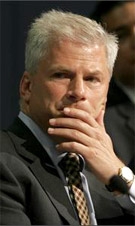
Three years ago, former U.S. Attorney John McKay was somewhere near the front lines of the nation’s drug war.

Directing federal prosecutions in Western Washington before he was fired in 2006 by the administration that appointed him, McKay’s office sent marijuana smugglers and farmers to prison on decade-long terms. It indicted a loudmouth Canadian pro-pot activist for selling cannabis seeds by mail order.

So the crowd at an Edmonds auditorium could have been forgiven its surprise on Monday when McKay stood on stage with travel author and decriminalization advocate Rick Steves and declared that, of course, he is “against stupid laws.”

“I think there has to be a shift in the paradigm,” said McKay, now a professor at Seattle University. “The correct policy change would be a top-to-bottom review of the nation’s drug laws.”

McKay joined a panel as part of an effort by Steves and the American Civil Liberties Union to, in their view, return rationality to discussions about the nation’s drug laws. They were joined there by Egil “Bud” Krogh, a former official in the Nixon White House who gained notoriety during the Watergate scandal, and state Rep. Mary Helen Roberts, an Edmonds Democrat who joked Monday about being dubbed by her colleagues the “Marijuana Queen of Northwest Washington” for her efforts on medical marijuana law reform.

While the panelists did not agree on all points, each said they see the need for substantive change in the way marijuana is regulated and offenders are punished. They also each spoke about the fears, or lack of courage, of elected officials in addressing issues surrounding the drug.

Steves and the ACLU launched the initiative last year partly as a response to that fear. The effort, built around an infomercial “Marijuana: It’s Time for a Conversation,” is aimed at encouraging citizens to discuss the issue openly.

“This is an issue that’s scary for people,” Steves said. “I have friends who oppose what I do on this issue because they’re worried about their kids. What they don’t understand is that so are we.”

Addressing the audience, a group mixed in age and outward appearance, Roberts argued that the law as it stands takes an unjust toll on minority communities. In essence, she said, it leaves law enforcement agencies to pursue people who are easiest to catch while their efforts could be more productively spent elsewhere.

At the same time, she said, lawmakers — even those who believe the laws to be unjust with regard to marijuana — are afraid of being branded soft on crime.

“As a community and a society, we’re afraid of crime,” Roberts said. “And if what you’re doing is being referred to as ’soft on crime,’ even without details, legislators respond negatively to it.”

Roberts also said the Legislature must revisit the state’s medical marijuana law, which, in her view, fails to adequately protect patients.

McKay, though, said such changes fail to address the larger problems with marijuana laws in the country.

Even as the Obama administration has adopted medical marijuana rules similar to those he advocated while U.S. Attorney — specifically, that federal agents not interfere with state medical marijuana regulations — McKay said that simply having federal agencies ignore the laws enacted by Congress does not go far enough.

“Federal law makes the possession of any amount of marijuana a crime,” McKay said. “So, even if you’ve got a certificate from your doctor, a federal officer could arrest you. … That’s just bad policy.”

McKay faulted Congress for failing to take initiative on the issue. It is not the place of federal prosecutors or law officers to make policy, he said, nor should the White House go it alone.

In the end, he argued, marijuana should not be lumped in with cocaine, methamphetamine and heroin as part of the war on drugs. Marijuana law, McKay said, “should look a lot more like alcohol (regulations) and a lot less like cocaine and methamphetamine (laws).”

18 negative effects of the ban on cannabis

Negative effects Cannabis prohabition

Here is a list of some of the negative effects of the ban on cannabis:

  1. The ban on cannabis means that in addition to the coffeeshops and people who grow for their own use, an illegal market in cannabis also exists. There is no possibility of control over this illegal market which leads to criminality, unsafe situations, and events that disturb the peace; and to which underage people have easy access.
  2. The ban on cannabis makes large scale crops and export of the product into a lucrative source of income for criminal organizations which can then use this income for other criminal activities, or ‘wash’ it via money laundering operations that can disturb the legal economy.
  3. The ban on cannabis encourages criminal and antisocial behavior: rules concerning safety and security (for growing and in the marketplace) are easily broken and this goes unpunished. Conflicts are resolved using violence.
  4. The ban on cannabis leads to an increase in prices, as the producer in an illegal market calculates their risk into the price.
  5. The ban leads to a migration of tourists to coffeeshops near the borders of the country, and the operation of ‘drug runners’ to transport the product. Simple solutions for this problem such as the proposal for a so-called ‘Weed Boulevard’ with legal supply logistics are held back by the ban on cannabis.
  6. The ban on cannabis puts enormous pressure on the resources of the police and the justice system, which cannot then devote them to other, more important goals. Some of the methods used to enforce the ban limit the personal freedom of civilians and are a matter of contention in court.
  7. The costs of enforcing the ban on cannabis are not justified by the results. Although the goal of the ban (an essential reduction in supply and demand) fails to come a single step closer, the ban itself is never brought forward for discussion.
  8. The ban on cannabis damages the credibility of the government, given that the use of cannabis continues to be firmly naturalized in society.
  9. The (world-wide) ban on cannabis is one of the pillars of the U.S. dominated War On Drugs, which has led to sizeable global violations of human rights; and severely damages both the environment, and the security of the populations of cannabis-producing lands.
  10. The ban on cannabis impedes the development of the industrial applications of the plant, which is capable of making a very valuable contribution to a sustainable future.
  11. The ban on cannabis makes it impossible to carry out standardized controls on the product. Therefore demands can hardly be placed on the product in terms of consistent quality, health, or accompanying information on the contents and effects of the product.
  12. The ban on cannabis leads to unwelcome and unhealthy practices in production which negatively affect the quality and effects of the product, and thereby damage the health of the consumer.
  13. The ban on cannabis criminalizes the cannabis consumer (over one million Dutch people), with negative social consequences for the people in question, their relationships, their family, and their home and work environment.
  14. The ban on cannabis is a restriction of the right to freedom of expression. It legitimizes information about the supposed evils of cannabis, information that cannot be seriously tested for durability, credibility or truthfulness and yet is used as justification for the active enforcement of the ban.
  15. The ban on cannabis damages the right of the individual to make decisions about his / her own body.
  16. The ban on cannabis damages the right of the individual to possess a medicine that is necessary to maintain or support his or her health and wellbeing.
  17. The ban on cannabis dissuades doctors from prescribing it to patients who could benefit from the effects; and delays the process of recognition of its medicinal applications in the treatment of multiple afflictions such as HIV and AIDS, Multiple Sclerosis, cancer, and chronic pain.
  18. The ban on cannabis denies the government the possibility of levying taxes on the product.

Source: hashmuseum.com/cannabis-cultuurprijs/

Posted in Quotes & Opinions, Society and Cannabis Tagged: cannabis, cannabis cultuurprijs, criminal organizations, Legalisation, medical, prohabition, top 18, war on drugs

Cannabis Ebonics – Stoner Terms

We found this list of stoner terms online and thought we’d share them.  Some of the terms are more frequently used in America however most (if not all) have made their way into the international stoner vocabulary.  We also dug up a classic clip of Ali G listing other stoner terms:

April 20th (4/20) – International Cannabis Day, everyone blazes on this day. Everyone blazes at 4:20 every day too.

Blaze – To get high!

Blunt - Either a hollowed out cigar filled with marijuana or (more commonly) a “marijuana cigarette” rolled with a blunt wrap (tobacco paper or emptied cigar).

Bowl - Can refer either to the part of a piece that holds cannabis, or to the pipe itself.

Bogart - The act of holding on to a joint/piece/blunt for too long, or one who does such an act: “Don’t bogart that joint my friend, pass it over to me”.

Boo – A street name for marijuana, listed only in anti-drug literature. No one has ever heard or used it. If you are ever arrested for possession, you should use this term, saving the taxpayers the expense of correcting and reprinting anti-pot pamphlets.

Kick-Hole / Carb – The hole on the side of a piece used to regulate air flow. Hold it closed with your thumb while inhaling to draw smoke into the chamber, then release to let air in and force the smoke into your lungs. Also called a “rush hole”.

Cherry – The red burning coal of marijuana in a joint or bowl.

Chillum – A pipe with the bowl in line with the stem.

Ganja – Just 1 of many synonyms for cannabis, others include  Dope, Marijuana, Grass, Draw, Puff, Blow, Weed, Gear, Ganja, Herb, Wacky Baccy, Skunk, Pot, Bob Hope and Bob – see the Ali G video below for many more :)

Hashish / Hash - The resin secreted by a marijuana plant. Different kinds of hash are prepared with a variety of recipes.

Hash oil - A liquid extracted from marijuana. Use mostly by dipping smokeables into the hash oil.

Hit – A drag or puff cannabis.

Hot Box / White wall - Getting high in a car or small space with no ventilation so that you are constantly inhaling atmospheric smoke.

Joint / Zut / Doob / Doobie - Marijuana cigarette. Kind Bud (chronic, hydro, sticky icky, highs) – High potency Cannabis.

Mids – Descent cannabis for the money you pay for it, if you don’t have a lot of money this is the best way to go.

Moocher – Someone who will smoke your bud in a second, but never has any of their own.

Papers / Skins – Cigarette papers used for rolling joints.

Piece - Refers to a pipe of one sort or another.

Resin - Black tar like stuff that builds up in smoking apparatuses.

Schwag – Low grade cannabis or the leftovers from the bottom of a big bag.

Houses made of hemp could help combat climate change!

We have recently come across this very interesting press release from Professor Peter Walker at the University of Bath (U.K) who is leading the research into the use of hemp-lime in construction.  Buildings and other infrastructure currently accounts for almost 20% of the UK’s eco-footprint.  This is another example of how this wonderful plant can help save reduce carbon dioxide emissions.  Recently we brought you the news that Hanes – one of the worlds biggest consumer brands – has been investing in a new hemp technology called Crailar which requires only a fraction of the water needed to make cotton; and we are very happy to announce that it is the subject of another of our articles, a Dutch company called Hempflax who has won the contract to supply the raw materials to Hanes – i.e. the HEMP!

Here’s the press release:

Houses made of hemp, timber or straw could help combat climate change by reducing the carbon footprint of building construction, according to researchers at the University of Bath.

Currently the construction industry is a major contributor of environmental pollutants, with buildings and other build infrastructure contributing to around 19% of the UK’s eco-footprint.  Researchers at the BRE Centre for Innovative Construction Materials are researching low carbon alternatives to building materials currently used by the construction industry.  Although timber is used as a building material in many parts of the world, historically it is used less in the UK than in other countries. Researchers at the Centre are developing new ways of using timber and other crop-based materials such as hemp, natural fibre composites and straw bales. Their work using straw bales as a building material has already been featured on Channel 4’s Grand Designs series.

Professor Peter Walker, Director of the Centre, is leading the research. He said: “The environmental impact of the construction industry is huge. For example, it is estimated that worldwide the manufacture of cement contributes up to ten per cent of all industrial carbon dioxide emissions.  “We are looking at a variety of low carbon building materials including crop-based materials, innovative uses of traditional materials and developing low carbon cements and concretes to reduce impact of new infrastructure. As well as reducing the environmental footprint, many low carbon building materials offer other benefits, including healthier living through higher levels of thermal insulation and regulation of humidity levels.”

Their research is being presented at the Sustainable Energy & the Environment showcase at the University of Bath.  The exhibition will be opened by David Willetts MP, Shadow Secretary of State for Innovation, Universities & Skills, and will be attended by industrialists, research councils, local and national government representatives and other key stakeholders from across the South West.  The exhibition coincides with the launch of the Institute for Sustainable Energy & the Environment (I-SEE) at the University of Bath, which will bring together experts from diverse fields of science, engineering, social policy and economics to tackle the problems of climate change.

I  found another article on the subject which can be read here:

Hemp could be used to build carbon-neutral homes of the future to help combat climate change and boost the rural economy, say researchers at the University of Bath.

A consortium, led by the BRE Centre for Innovative Construction Materials based at the University, has embarked on a unique housing project to develop the use of hemp-lime construction materials in the UK.  Hemp-lime is a lightweight composite building material made of fibres from the fast growing plant, bound together using a lime-based adhesive. The hemp plant stores carbon during its growth and this, combined with the low carbon footprint of lime and its very efficient insulating properties, gives the material a ‘better than zero carbon’ footprint.  Professor Pete Walker, Director of the BRE Centre for Innovative Construction Materials, explained: “We will be looking at the feasibility of using hemp-lime in place of traditional materials, so that they can be used widely in the building industry.  “We will be measuring the properties of lime-hemp materials, such as their strength and durability, as well as the energy efficiency of buildings made of these materials.  Using renewable crops to make building materials makes real sense – it only takes an area the size of a rugby pitch four months to grow enough hemp to build a typical three bedroom house.  Growing crops such as hemp (cannabis Sativa) can also provide economic and social benefits to rural economies through new agricultural markets for farmers and associated industries.”

The three year project, worth almost ?750,000, will collect vital scientific and engineering data about this new material so that it can be more widely used in the UK for building homes.  The project brings together a team of nine partners, comprising BRE Ltd, Feilden Clegg Bradley Studio architects, Hanson Cement, Hemcore, Lhoist UK, Lime Technology, National Non-Food Crops Centre, University of Bath and Wates Living Space.  As part of the project the University of Bath received a research grant of ?391,000 from the Renewable Materials LINK programme run by the Department for Environment, Food & Rural Affairs (DEFRA).

New medical marijuana policy issued by the President

The Obama administration announced today that it will not seek to arrest medical marijuana users and suppliers as long as they conform to state laws, under new policy guidelines to be sent to federal prosecutors Monday 19th October. A 3-page memo spelling out the policy is expected to be sent Monday to federal prosecutors in the 14 states which allow some use of marijuana for medical purposes, and also to top officials at the FBI and the DEA.

barack obama smoking pot, marijuana, cannabis

According to officials, the memo is designed to give a sense of prosecutorial priorities to U.S. Attorneys in the states that allow medical marijuana. It notes that cannabis sales in the United States are the largest source of money for violent Mexican drug cartels, but adds that federal law enforcement agencies have limited resources – It emphasizes that prosecutors have wide discretion in choosing which cases to pursue, and says it is not a good use of federal manpower to prosecute those who are without a doubt in compliance with state law.

And while the policy memo describes a change in priorities away from prosecuting medical marijuana cases, it does not rule out the possibility that the federal government could still prosecute someone whose activities are allowed under state law. Two Justice Department officials described the new policy to The Associated Press, saying prosecutors will be told it is not a good use of their time to arrest people who use or provide medical marijuana in strict compliance with state laws. The new policy is a significant departure from the Bush administration, which insisted it would continue to enforce federal anti-pot laws regardless of state codes. Fourteen states (Alaska, California, Colorado, Hawaii, Maine, Maryland, Michigan, Montana, Nevada, New Mexico, Oregon, Rhode Island, Vermont and Washington) currently allow some use of marijuana for medical purposes with more States expected to follow suit in the near future. California remains unique among those for the presence of dispensaries – businesses that sell marijuana and even advertise their services.

Attorney General Eric Holder said in March that he wanted federal law enforcement officials to pursue those who violate both federal and state law, but it has not been clear how that goal would be put into practice. The officials spoke on condition of anonymity because they are not authorized to discuss any legal guidance before it is formally issued. Officials were keen to stipulate that the government will still prosecute those who use medical marijuana as a cover for other illegal activity. The memo particularly warns that some suspects may hide old-fashioned drug dealing or other crimes behind a medical marijuana business. In particular, the memo urges prosecutors to pursue marijuana cases which involve violence, the illegal use of firearms, selling pot to minors, money laundering or other crimes. Medical marijuana advocates have been anxious to see exactly how the administration would implement candidate Barack Obama’s repeated promises to change the policy in situations in which state laws allow the use of medical marijuana. Shortly after Obama took office, DEA agents raided four dispensaries in Los Angeles, prompting confusion about the government’s plans.

Source:AP

Posted in Cannabis History, Cannabis News, medicinal, Society and Cannabis Tagged: Barack Obama, busts, cannabis, cannabis prohibition, DEA, dispensary, drugs, FBI, Legalisation, marijuana, medical, medicinal, Medicinal cannabis, raids, sativa, Sensi Seeds, THC, war on drugs, warrants, weed

Medical marijuana dispensaries could face closure
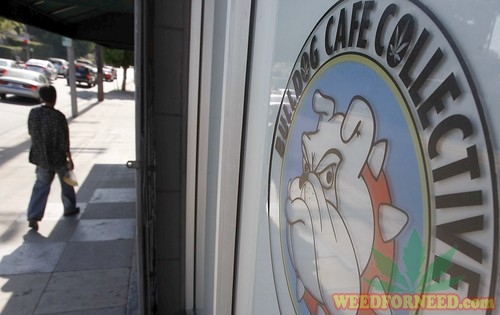
The Bulldog Cafe CollectiveWith hundreds of medical marijuana dispensaries in Los Angeles operating in violation of a moratorium, the City Council will start the process of shutting some down Tuesday by voting on exemption requests filed by 16 dispensaries.

Most, if not all, of the requests probably will be denied because the dispensaries did not register with the city by the moratorium’s deadline in 2007. A denial would allow the city to take legal steps to force them to close. Read the rest of this entry »