Posts Tagged ‘Quotes & Opinions’
Judge Jim Gray: In Harm’s Way
 September 5th, 2011 |
  Author:
  Jim Gray talking about America?s “failed and hopeless policy of drug prohibition”. Describing himself as a “conservative judge” who has never used illicit drugs or marijuana, he nevertheless spells out why he believes that prohibition of cannabis is putting children and young people in more danger than regulation would.
 Posted in News |
  Tags: cannabis, drug war, Jim Gray, Judge, prohabition, Quotes & Opinions, Society and Cannabis, Videos |
  No Comments »
Why Medicinal Marijuana Is Here to Stay
“We are not far from a time when pot will be hailed as a wonder drug.”
The following is the text of a speech by Lester Greenspoon, M.D. recently delivered to the 2011 NORML conference.
 In 1967, because of my concern about the rapidly growing use of the dangerous drug marijuana, I began my studies of the scientific and medical literature with the goal of providing a reasonably objective summary of the data which underlay its prohibition. Much to my surprise, I found no credible scientific basis for the justification of the prohibition. The assertion that it is a very toxic drug is based on old and new myths. In fact, one of the many exceptional features of this drug is its remarkably limited toxicity. Compared to aspirin, which people are free to purchase and use without the advice or prescription of a physician, cannabis is much safer: there are well over 1000 deaths annually from aspirin in this country alone, whereas there has never been a death anywhere from marijuana. In fact, when cannabis regains its place in the US Pharmacopeia, a status it lost after the passage of the Marijuana Tax Act of 1937, it will be seen as one of the safest drugs in that compendium. Moreover, it will eventually be hailed as a “wonder drug” just as penicillin was in the 1940s. Penicillin achieved this reputation because it was remarkably non-toxic, it was, once it was produced on an economy of scale, quite inexpensive, and it was effective in the treatment of a variety of infectious diseases. Similarly, cannabis is exceptionally safe, and once freed of the prohibition tariff, will be significantly less expensive than the conventional drugs it replaces while its already impressive medical versatility continues to expand. Read the rest of this entry »
Posted in News |
Tags: Harvard Medical School, legalize, Lester Grinspoon, medicinal, medicinal marijuana, norml, Quotes & Opinions, Society and Cannabis, wonder drug |
No Comments »
French newspaper Le Figaro warns of cannabis cyber-police and fictional worldwide cannabis seed shipping
In these times of increasing repression in France, national daily ‘Le Figaro’ shows its true colours as a propaganda tool rather than a source of factual information.
An article published on the website of Le Figaro last week (23rd March 2011) aroused our curiosity as, in addition to vague threats about cyberpolice, it mentioned the well-known cannabis seed company Sensi Seeds on several occasions.
Read the rest of this entry »
Posted in News |
Tags: Bedrocan, Bob Marley, cannabis, cannabis lies, cannabis seeds, cultivation equipment, cyberpolice, Elys?e, fertilizer, France, Ganja, hemp, Holland, le Figaro, legalization, legislation, marijuana, Marley's Collie, Netherlands, Police & Cannabis, Quotes & Opinions, seedbank, Sensi Seeds, Shiva Shanti, tents, varieties |
No Comments »
We declared a war on ourselves, not drugs!
 As the country of origin for the war on drugs, the USA is the perfect example to overview the consequences of such measure.
As some Americans have been, and continue to be, pointing at the utility of such measures, Tony Newmann, communications director for the Drug Policy Alliance gives his view on the conception of drugs:
Read the rest of this entry »
Posted in News |
Tags: alcohol, Americans, cigarette, coffee, discrimination, drug-free society, drugs, families, illegal, incarceration, jail, legal, marijuana, Quotes & Opinions, racist, Tony Newmann, war on drugs |
No Comments »
Balkenende’s Message To Youth: (Some) Drugs Bad, Swearing Good
 Is Jan Peter Balkenende’s publicist on a secret sabotage mission?
The recent photos of the Dutch Prime Minister wandering around in a ‘FUCK DRUGS!’ t-shirt and swigging from a can of Grolsch at two in the afternoon would suggest so.
Read the rest of this entry »
Posted in News |
Tags: cannabis lies, drugs, fuck drugs, hypocritical, obscenity, politicians, publicity, Quotes & Opinions, swearing |
No Comments »
Judge Jim Gray – 6 Groups Who Benefit From Drug prohibition
In little over 8 minutes Judge Jim Gray from Orange County, California, explains what 6 groups benefit most from drug prohibition AND he gives 6 clear reasons why cannabis should be legal!
Posted in News |
Tags: drug crime, Jim Gray, legalize, legalize cannabis, medicinal marijuana, Orange County, prohibition, Quotes & Opinions, war on drugs |
No Comments »
Colorado companies allowing their employees to use medical marijuana?
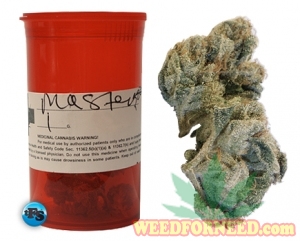 When it comes to medical marijuana, Colorado employers are caught between conflicting laws.
Read the rest of this entry »
New UK Government’s drug adviser Les Iversen seems to have a selective memory
 Another crazy news story from the UK. As you might have read David Nutt was sacked because of him criticizing the Government’s decision to reclassify cannabis as a Class B substance.. He argued that the scientific research was devaluated and the UK government making an “artificial” separation of alcohol and tobacco from illegal drugs.
Read the rest of this entry »
Posted in News, Useful articles |
Tags: cannabis, Cannabis News, Class B substance, David Nutt, decriminalised, legalised, Les Iversen, Quotes & Opinions, UK, united Kingdom |
No Comments »
The Super-Marijuana “Kush/Skunk” story
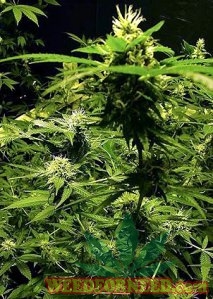 In the US, it seems that the word ‘Kush’ is about as meaningful as ‘Skunk’ is in the UK.
That is, the two terms are applied to most indoor weed that’s sold for profit, and both names are used to suggest that the cannabis being sold is highly potent, rather than to indicate any particular genetic heritage. Before being adopted as the strain-name buzzwords of the moment, both “Skunk” and “Kush” were fairly strictly defined strains, with clear breeding or geographical origins.
Read the rest of this entry »
Posted in News |
Tags: buzzwords, cannabis lies, Drugs law, kush, National Drug Intelligence Center, Quotes & Opinions, sinsemilla, skunk, super-weed, THC |
No Comments »
18 negative effects of the ban on cannabis

Here is a list of some of the negative effects of the ban on cannabis:
- The ban on cannabis means that in addition to the coffeeshops and people who grow for their own use, an illegal market in cannabis also exists. There is no possibility of control over this illegal market which leads to criminality, unsafe situations, and events that disturb the peace; and to which underage people have easy access.
- The ban on cannabis makes large scale crops and export of the product into a lucrative source of income for criminal organizations which can then use this income for other criminal activities, or ‘wash’ it via money laundering operations that can disturb the legal economy.
- The ban on cannabis encourages criminal and antisocial behavior: rules concerning safety and security (for growing and in the marketplace) are easily broken and this goes unpunished. Conflicts are resolved using violence.
- The ban on cannabis leads to an increase in prices, as the producer in an illegal market calculates their risk into the price.
- The ban leads to a migration of tourists to coffeeshops near the borders of the country, and the operation of ‘drug runners’ to transport the product. Simple solutions for this problem such as the proposal for a so-called ‘Weed Boulevard’ with legal supply logistics are held back by the ban on cannabis.
- The ban on cannabis puts enormous pressure on the resources of the police and the justice system, which cannot then devote them to other, more important goals. Some of the methods used to enforce the ban limit the personal freedom of civilians and are a matter of contention in court.
- The costs of enforcing the ban on cannabis are not justified by the results. Although the goal of the ban (an essential reduction in supply and demand) fails to come a single step closer, the ban itself is never brought forward for discussion.
- The ban on cannabis damages the credibility of the government, given that the use of cannabis continues to be firmly naturalized in society.
- The (world-wide) ban on cannabis is one of the pillars of the U.S. dominated War On Drugs, which has led to sizeable global violations of human rights; and severely damages both the environment, and the security of the populations of cannabis-producing lands.
- The ban on cannabis impedes the development of the industrial applications of the plant, which is capable of making a very valuable contribution to a sustainable future.
- The ban on cannabis makes it impossible to carry out standardized controls on the product. Therefore demands can hardly be placed on the product in terms of consistent quality, health, or accompanying information on the contents and effects of the product.
- The ban on cannabis leads to unwelcome and unhealthy practices in production which negatively affect the quality and effects of the product, and thereby damage the health of the consumer.
- The ban on cannabis criminalizes the cannabis consumer (over one million Dutch people), with negative social consequences for the people in question, their relationships, their family, and their home and work environment.
- The ban on cannabis is a restriction of the right to freedom of expression. It legitimizes information about the supposed evils of cannabis, information that cannot be seriously tested for durability, credibility or truthfulness and yet is used as justification for the active enforcement of the ban.
- The ban on cannabis damages the right of the individual to make decisions about his / her own body.
- The ban on cannabis damages the right of the individual to possess a medicine that is necessary to maintain or support his or her health and wellbeing.
- The ban on cannabis dissuades doctors from prescribing it to patients who could benefit from the effects; and delays the process of recognition of its medicinal applications in the treatment of multiple afflictions such as HIV and AIDS, Multiple Sclerosis, cancer, and chronic pain.
- The ban on cannabis denies the government the possibility of levying taxes on the product.
Posted in News |
Tags: cannabis, cannabis cultuurprijs, criminal organizations, Legalisation, medical, prohabition, Quotes & Opinions, Society and Cannabis, top 18, war on drugs |
No Comments »