
Posts Tagged ‘Society and Cannabis’
Judge Jim Gray: In Harm’s Way
 September 5th, 2011 |
  Author:
  Jim Gray talking about America?s “failed and hopeless policy of drug prohibition”. Describing himself as a “conservative judge” who has never used illicit drugs or marijuana, he nevertheless spells out why he believes that prohibition of cannabis is putting children and young people in more danger than regulation would.
 Posted in News |
  Tags: cannabis, drug war, Jim Gray, Judge, prohabition, Quotes & Opinions, Society and Cannabis, Videos |
  No Comments »
The War On Drugs Has Failed!
The global war on drugs has failed, a high-level commission comprised of former presidents, public intellectuals and other leaders studying drug policies concluded in a report released Thursday.
International efforts to crack down on drug producers and consumers and to try to reduce demand have had “devastating consequences for individuals and societies around the world,” the report from the Global Commission on Drug Policy said. Read the rest of this entry »
Posted in News |
Tags: Cannabis News, decriminalization, Kofi Annan, legalize, marijuana, Mario Vargas Llosa, Richard Branson, Society and Cannabis, war on drugs |
No Comments »
Why Medicinal Marijuana Is Here to Stay
“We are not far from a time when pot will be hailed as a wonder drug.”
The following is the text of a speech by Lester Greenspoon, M.D. recently delivered to the 2011 NORML conference.
 In 1967, because of my concern about the rapidly growing use of the dangerous drug marijuana, I began my studies of the scientific and medical literature with the goal of providing a reasonably objective summary of the data which underlay its prohibition. Much to my surprise, I found no credible scientific basis for the justification of the prohibition. The assertion that it is a very toxic drug is based on old and new myths. In fact, one of the many exceptional features of this drug is its remarkably limited toxicity. Compared to aspirin, which people are free to purchase and use without the advice or prescription of a physician, cannabis is much safer: there are well over 1000 deaths annually from aspirin in this country alone, whereas there has never been a death anywhere from marijuana. In fact, when cannabis regains its place in the US Pharmacopeia, a status it lost after the passage of the Marijuana Tax Act of 1937, it will be seen as one of the safest drugs in that compendium. Moreover, it will eventually be hailed as a “wonder drug” just as penicillin was in the 1940s. Penicillin achieved this reputation because it was remarkably non-toxic, it was, once it was produced on an economy of scale, quite inexpensive, and it was effective in the treatment of a variety of infectious diseases. Similarly, cannabis is exceptionally safe, and once freed of the prohibition tariff, will be significantly less expensive than the conventional drugs it replaces while its already impressive medical versatility continues to expand. Read the rest of this entry »
Posted in News |
Tags: Harvard Medical School, legalize, Lester Grinspoon, medicinal, medicinal marijuana, norml, Quotes & Opinions, Society and Cannabis, wonder drug |
No Comments »
“Senora Cannabis” Alicia Castilla Released After 94 Days

Alicia Castilla, cannabis activist and author, aka Senora Cannabis
The 5th of May saw the release of 66 year old Alicia Castilla, who was held in prison for 94 days after police discovered marijuana plants at her home in Atl?ntida, Uruguay.
In a similar way to the Netherlands, laws in Uruguay allow possession of cannabis for personal use (although in Uruguay the amount considered reasonable for personal consumption is decided by a judge). Cultivation however is completely forbidden, a paradox that forces users to either (illegally) buy from criminal dealers or break the law by cultivating cannabis for their own use. Alicia Castilla, author of two books on cannabis, chose the latter option.
In January 2011 police raided the house she had bought with the intention of having ‘a peaceful place to spend my old age’, and discovered 29 unsexed cannabis seedlings. Read the rest of this entry »
Posted in News |
Tags: alicia castilla, Cannabis News, cannabis prohibition, Legalisation, legalize, politics, Society and Cannabis, Uruguay |
No Comments »
Medicinal cannabis patients classed as ‘drug addicts’ by Oregon sheriffs
Despite the amount of illegal firearms and genuinely harmful drugs that America seems to be knee-deep in, police in Oregon are concerned that card-holding medicinal marijuana users might be legally carrying guns.
Under the U. S. Gun Control Act of 1968, guns may not be sold to drug addicts. Most people would agree that this is a good idea, as the mental image of a ‘drug addict’ is almost always negative: shaking, dirty, paranoid, and incapable of rational thought. Nobody wants to arm that person.
Read the rest of this entry »
Posted in News |
Tags: cannabis, Cannabis News, drugs, government, Legalisation, legislation, marijuana, medical, medical marijuana, medicinal, Medicinal cannabis, medicine, society, Society and Cannabis, USA |
No Comments »
Cannabis Debates Begin Tomorrow
In response to the current plans for limiting the right to buy cannabis to Dutch residents, and other related restrictions, a series of debates are taking place throughout the Netherlands during February and March. Beginning tomorrow (05/02) at the Cannabis College in Amsterdam, the Cannabis Debates are open to everyone over the age of 18 and attendance (14:00 to 17:00) is free.
Read the rest of this entry »
Posted in News |
Tags: amsterdam, cannabis, cannabis debates, Cannabis Events, Cannabis News, cannabis prohibition, Coffeeshops, drugs policy, dutch, government, Legalisation, legalize, marijuana, politics, society, Society and Cannabis |
No Comments »
What Will My Grow Room Smell Like?
The City Council Can Help!
 30,000 cannabis-scented cards have been distributed to residents of Den Haag and Rotterdam by their city councils. This disturbing plan aims to help people recognize the smell of grow rooms and report on their neighbours.
Read the rest of this entry »
Posted in News |
Tags: cannabis, Cannabis Products, cannabis-scented scratch cards, city council, Den Haag, general growing info, grow room, marijuana, neighbor, police, Report, Rotterdam, Society and Cannabis |
No Comments »
Once upon a time, booze was banned and weed wasn’t
Reviewed: Last Call: The Rise and Fall of Prohibition, by Daniel Okrent, Scribner, 468 pages, $30 Source: Cannabisnews.
What Can Today’s Crusaders Against Prohibition Learn From Their Predecessors Who Ended the Alcohol Ban?
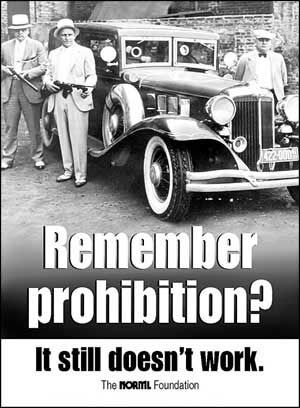 Of the 27 amendments to the U.S. Constitution, the 18th is the only one explicitly aimed at restricting people’s freedom. It is also the only one that has ever been repealed. Maybe that’s encouraging, especially for those of us who recognize the parallels between that amendment, which ushered in the nationwide prohibition of alcohol, and current bans on other drugs.
Read the rest of this entry »
Posted in News |
Tags: alcohol, amendment, antiprohibitionists, cannabis, constitution, drug, legalize, legislation, prohibition, Society and Cannabis, united states |
No Comments »
Debating drug policy and the path to change
By Virginia Berridge:
 As a historian of drug policy, my natural inclination is to turn to the past. An encounter in the mid-19th century Cambridge market place came to mind. A character in Charles Kingsley’s novel Alton Locke relates what the “druggist’s shop” was selling: “you’ll see the little boxes, doozens and dozens a’ ready on the counter…Opium, bor alive, opium!” Opium was on open sale in the 19th century; after 1868 pharmacists were in charge with minimal regulation. In the absence of much by way of effective therapeutics, the drug was central to medical practice and a mainstay of self-medication—the aspirin or paracetamol of its day.
Cannabis was a different matter. Its widespread use in the Far East was never replicated in the home country. Queen Victoria did not, despite recent claims, use cannabis in childbirth, although her physician, William O’Shaughnessy, wanted to introduce the drug into medical practice. Uncertainty of its action limited its use and differentiated cannabis from opium, whose alkaloids, codeine, morphine, and later heroin, gained it a central role in developing professional therapeutics.
Read the rest of this entry »
Posted in News |
Tags: cannabis, cultures, drug, drug use, pharmacy, policy, rational, reality, Society and Cannabis, therapeutics |
No Comments »
Dutch Coffeeshop Pass System Approved By European Court
Coffeeshops will be effectively restricted from selling cannabis to non-residents, and Amsterdam is no exception. The controversial ‘weed pass’ system planned by the new Dutch government is not in conflict with the European treaty on free movement of goods, nor the current anti-discriminatory legislation, it was announced yesterday.

Will tourists still be allowed to share cannabis bought by a resident?
Read the rest of this entry »
Posted in News |
Tags: amsterdam, cannabis, Cannabis News, Coffeeshops, drugs policy, dutch, government, marijuana, politics, Society and Cannabis, weed |
No Comments »